
A paper lantern glows against deep green leaves. Pale fabric catches a patch of sun. A figure pauses in a room crowded with the materials of painting. John Singer Sargent could make each of these ordinary encounters feel charged with attention.
Although his reputation is closely tied to portraiture, his gardens, interiors and informal figure paintings offer another way into his work. This guide introduces the artist and looks closely at six John Singer Sargent paintings available as unframed art prints at Peaceful Artworks. The images show the artworks themselves, so you can compare their colour and composition before thinking about frames.
Who Was John Singer Sargent?
John Singer Sargent (1856–1925) was an American artist born in Florence to American parents. His upbringing involved extensive European travel, and in 1874 he began studying in Paris with the portrait painter Carolus-Duran. His teacher encouraged direct handling of paint and close attention to masters such as Velázquez. Sargent went on to build an international career, with patrons on both sides of the Atlantic.
Portraits were only part of that career. He also made landscapes, watercolours and ambitious murals. In his later years, travel and watercolour painting occupied an increasingly important place in his work. This breadth matters when looking at his art: a garden scene and a formal portrait can share the same alertness to a turning head, a bright sleeve or the edge between light and shadow. Read The Met’s biography of Sargent.
How To Look At A Sargent Painting
Start with the largest areas of light and dark. Before asking who a figure is or where a view was painted, notice where your eye goes first. Sargent often makes a pale shape—clothing, stone, a flower—carry much of the visual weight. Darker surroundings give it force.
Then move closer. An area that seemed precisely described from a distance may be made from broad, economical marks. The pleasure is in that change of scale: paint becomes fabric, foliage or light, then becomes paint again. The following six works offer different ways to notice this.
1. Carnation, Lily, Lily, Rose
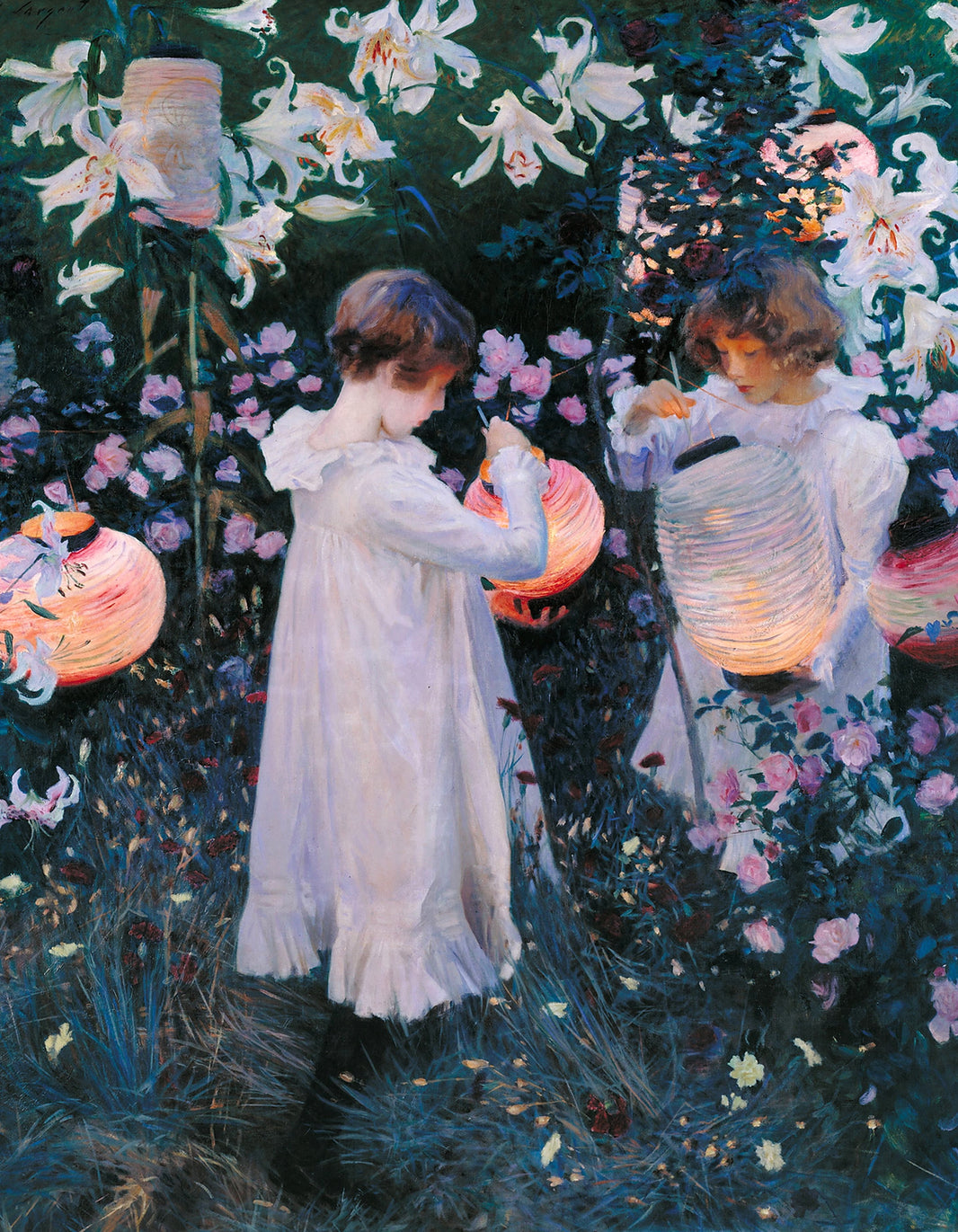
The lanterns are small, but they change everything. Their warm glow makes the surrounding greens seem cooler, while white dresses and lilies hold the last light of the evening. Sargent gives us a garden dense with flowers without losing the delicate concentration of the two children.
Tate dates Carnation, Lily, Lily, Rose to 1885–86. Looking at the painting, the fascination is less with a single object than with the meeting of two kinds of light: fading daylight and the illumination held inside the paper lanterns. Neither overwhelms the other. That balance is what makes the scene feel poised on the edge of change.
Try looking first at the lanterns, then at the pale petals near them. The picture becomes a series of colour relationships rather than a list of flowers. For a home, this is a richly coloured focal point that still rewards quiet attention. Soft green, warm white or a restrained pink elsewhere in the room can pick up its palette without competing with it.
View Carnation, Lily, Lily, Rose As An Unframed Print
2. The Luxembourg Gardens
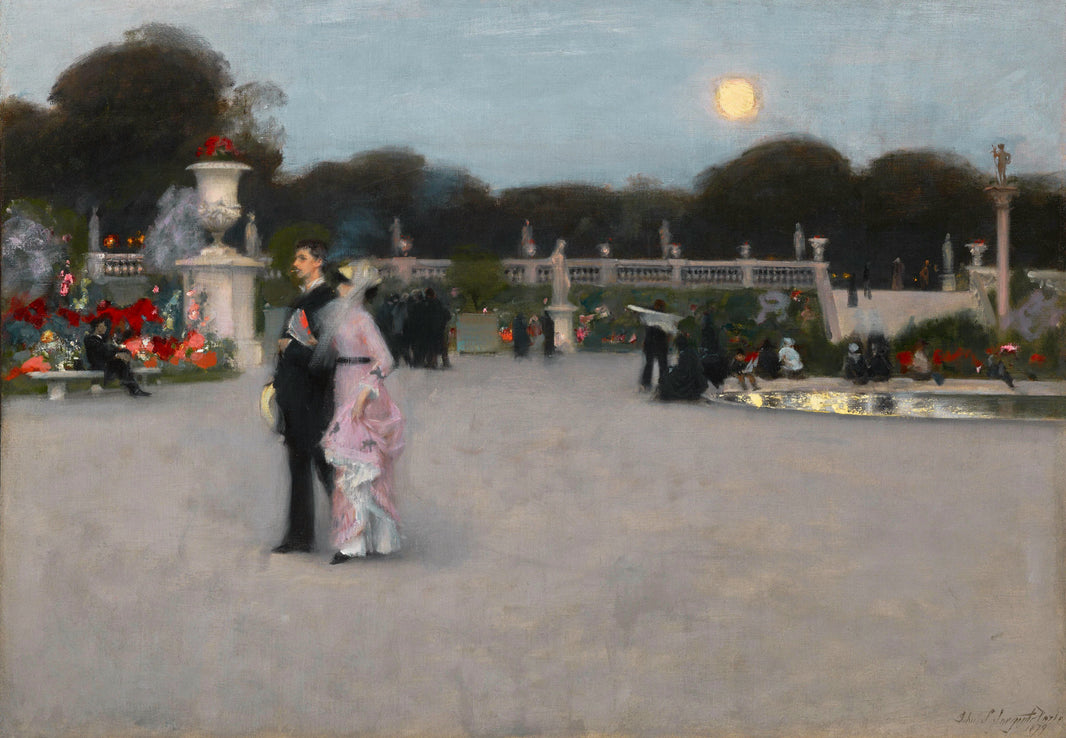
Here the evening opens out. A broad expanse of ground separates us from the distant garden, and a couple stands out against the cooler tones of the scene. Above the trees, a small disc of light draws the eye into the sky. Compared with the crowded flowers of Carnation, Lily, Lily, Rose, the space feels almost like an exhalation.
Notice how much of the composition Sargent allows to remain relatively uneventful. That open ground gives the figures room and makes the distant activity feel further away. The painting’s atmosphere depends on restraint: the light does not need to be spectacular to establish a particular hour.
This is a useful choice if you enjoy city scenes but want something gentler than a busy street. Its broad format can work above a sideboard or in a reading area, where the pale foreground and distant trees remain easy to take in.
View The Luxembourg Gardens As An Unframed Print
3. Smoke Of Ambergris

A nearly white painting can be surprisingly full of colour. In Smoke of Ambergris, the robe, wall and architectural details belong to a narrow tonal range, yet they remain distinct. Warm cream, grey shadow and the darker patterned floor give the figure weight and presence.
Look at the difference between a hard architectural edge and a fold in the fabric. One establishes the setting; the other suggests movement and the body beneath the cloth. The restrained background makes the gesture of the raised arms especially clear. You do not have to identify every detail to feel the painting’s controlled, deliberate arrangement.
The work offers a different starting point for choosing a Sargent print: texture and tone rather than a bright garden palette. Its vertical shape suits a narrower wall, and a little space around the frame helps preserve the sense of stillness. Keep in mind that pale artwork needs enough contrast with its surroundings to remain visible.
View Smoke Of Ambergris As An Unframed Print
4. An Artist In His Studio
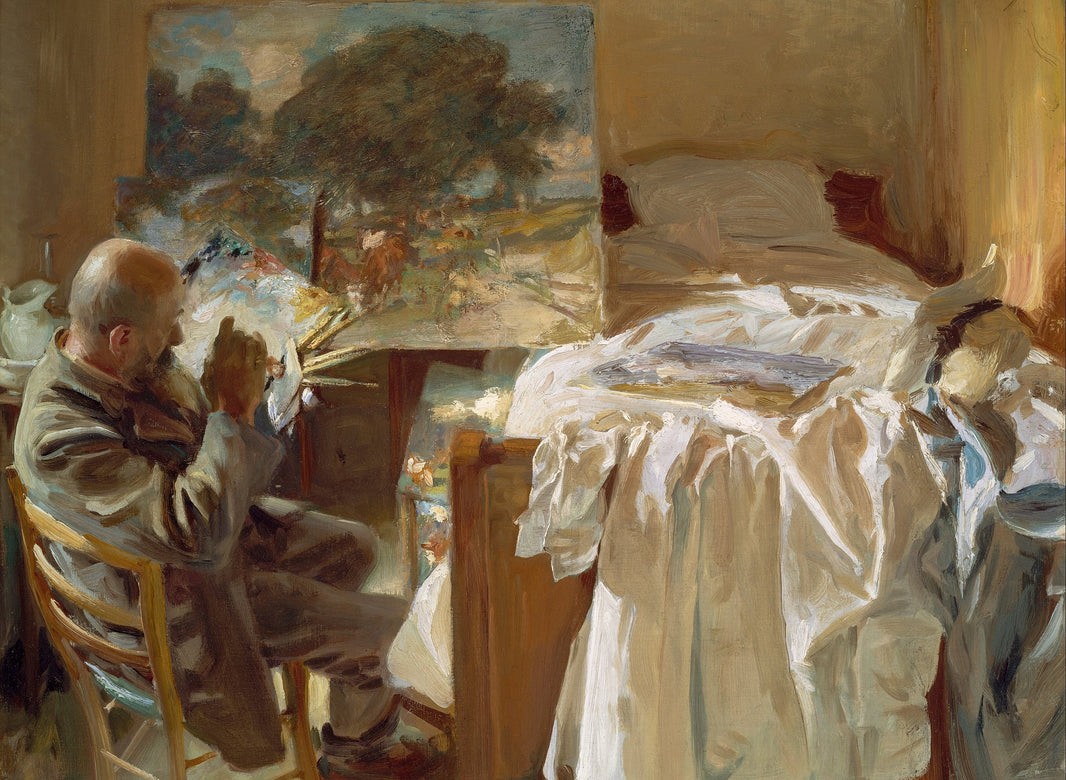
The title suggests a formal workplace; the picture gives us something more improvised. A landscape painting shares a compact interior with furniture and rumpled white bedding. The working artist seems absorbed in his task, and the room becomes interesting precisely because it has not been arranged for our benefit.
The Metropolitan Museum of Art identifies the painter as Sargent’s friend Ambrogio Raffele, shown working at Purtud in northern Italy. That context brings the scene into focus: we are watching the making of a picture, with the painted landscape set inside another painting. The room and the imagined outdoor space exist together.
The light fabric is worth studying in its own right. Broad passages describe folds and changes of direction without giving each crease equal importance. This is an appealing print for a study or creative workspace, where its subject can feel like company rather than decoration.
View An Artist In His Studio As An Unframed Print
5. The Fountain, Villa Torlonia
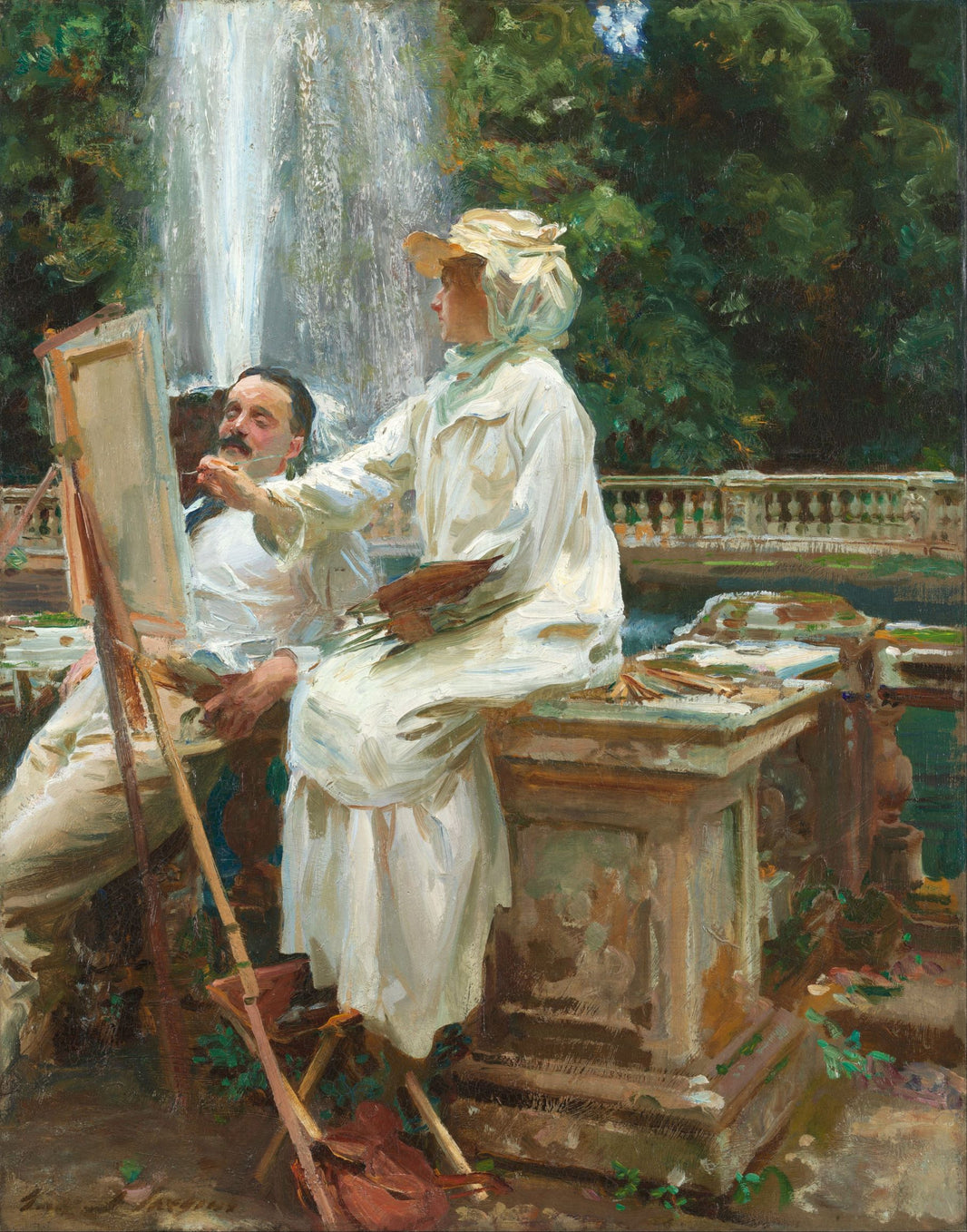
Water, pale clothing and deep foliage give this garden scene its changing rhythm. The fountain introduces a strong vertical movement, while the figures and stonework hold the foreground together. Rather than offering a distant panorama, Sargent places us close to a particular corner of the garden.
The eye can move between the falling water and the lighter clothing, then settle into the darker leaves. It is an effective lesson in contrast: the shaded surroundings allow the bright passages to feel alive. The painting has plenty of incident, but its repeated light and dark shapes keep it coherent.
For a living room or garden room, this print offers a way to bring foliage indoors without choosing a purely botanical subject. Pair it with simple materials and let the shifts between green, stone and white do most of the work.
View The Fountain, Villa Torlonia As An Unframed Print
6. The Tease
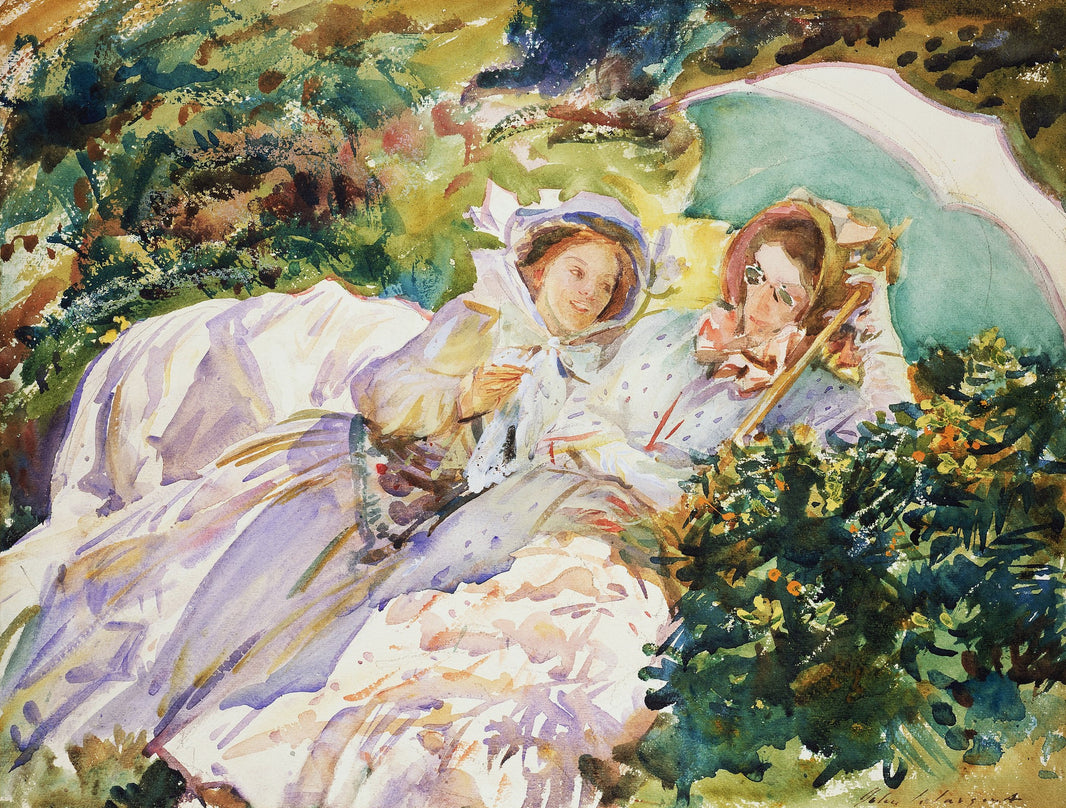
In The Tease, pale dresses, a parasol and broken patches of sunlight create a scene that feels loose and sociable. The figures are nestled into the greenery rather than isolated against a neutral background. Their surroundings matter as much as their expressions.
Follow the light across the fabrics. Lavender and cream passages turn into folds, while small darker marks keep the shapes from becoming flat. The brushwork can seem restless when examined closely, but the larger arrangement of bodies, parasol and foliage brings it back into balance.
This is Sargent at his most inviting for someone drawn to informal outdoor scenes. It could sit comfortably in a bedroom or sitting room with soft textiles, especially if the surrounding wall is kept simple enough for the painting’s lively surface to remain the focus.
View The Tease As An Unframed Print
Choosing A John Singer Sargent Print For Your Home
Choose the atmosphere you want to return to, rather than trying to find the most famous image. The Luxembourg Gardens offers open space and evening quiet. Smoke of Ambergris concentrates on pale tones and texture. Carnation, Lily, Lily, Rose and The Tease bring a more abundant interplay of flowers, fabric and foliage.
For a pair, compare the works through a shared detail. The pale clothing and greenery in The Fountain, Villa Torlonia and The Tease create a natural connection. A contrast can work too: the intimate room of An Artist in His Studio beside the open ground of The Luxembourg Gardens gives the eye two different kinds of space.
Allow For The Frame And Mount
An unframed print lets you decide how the finished work will sit in your room. Measure the intended wall area and check the sizes on the product page; the outer frame and any mount will add to those dimensions. A simple frame can keep attention on Sargent’s colour, while a mount gives a busy composition breathing room. Ask your framer about suitable materials for long-term display.
Questions About Sargent And His Prints
What Is John Singer Sargent Best Known For?
He is especially associated with portraiture, but his work also includes landscapes, informal figure scenes, watercolours and murals. Exploring those different subjects reveals how widely he applied his interest in light and the expressive possibilities of paint.
Are These Original Paintings Or Reproductions?
The products linked here are fine art reproduction prints, not original Sargent paintings. Each link leads to an unframed print listing. Check that listing for the available sizes and product details before ordering.
Which Sargent Painting Should I Choose?
Begin with the image you most enjoy looking at. Compare its shape and level of detail with your available wall space, then consider its colours alongside your existing furnishings. You can also explore our guide to eight peaceful paintings for your home for a wider selection of artists.
A Painter Worth Looking At Slowly
Sargent’s fluency can make his pictures seem effortless. Spend longer with them and the decisions become more visible: where to sharpen an edge, where to leave a passage open, where a small warm light can transform the whole scene. A print gives you the opportunity to return to those decisions in everyday life.
Explore the individual paintings above, or browse our unframed fine art prints to find the work you want to live with.